One of the most persistent and consequential fictions in Western progressive politics is that hostility to Israel is a natural, deeply rooted feature of Iranian political identity. In this narrative, Israel and Iran are permanent enemies — a conflict of civilizations, religions, and peoples — and any sympathy between Israelis and Iranians is either a political manipulation or a historical curiosity from a world that no longer exists.
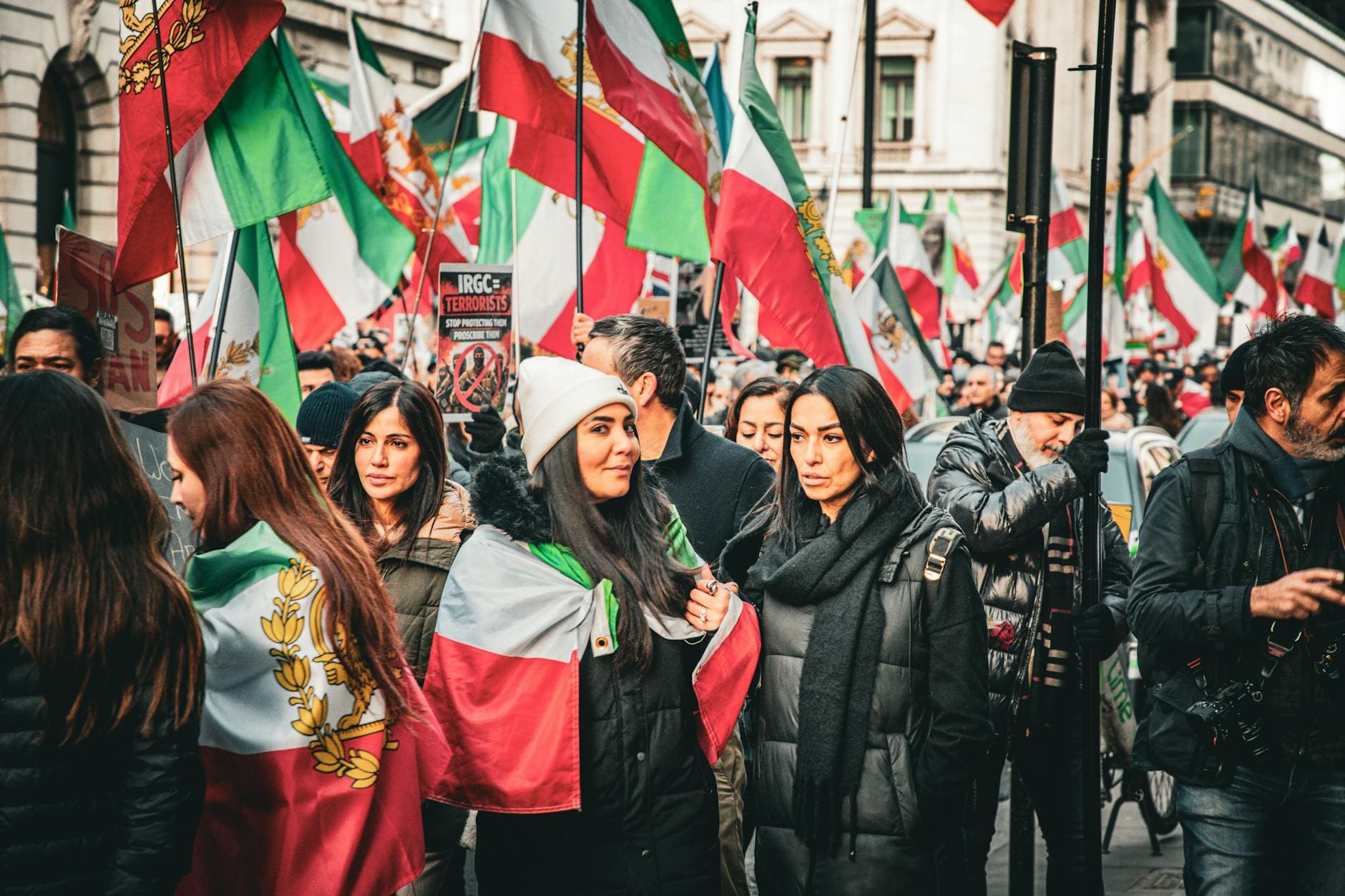
The evidence of the past several years has done considerable damage to this narrative. In January 2026, as Iranian security forces killed protesters in the streets of Tehran, Isfahan, and Mashhad, demonstrators at diaspora rallies in London, Los Angeles, Berlin, Paris, and Toronto waved two flags side by side: the pre-revolutionary Iranian lion-and-sun banner, and the Israeli flag. Israel’s intelligence agency Mossad posted a message of solidarity with the protesters: “We are with you. Not only from a distance and verbally. We are with you in the field.” Israeli Prime Minister Netanyahu said Israelis “identify with the struggle of the Iranian people.” Exiled Crown Prince Reza Pahlavi, the most prominent figure of the Iranian opposition movement, proposed the “Cyrus Accords” — a framework for normalization between a future democratic Iran and Israel, grounded explicitly in the ancient relationship between the Persian and Jewish peoples.
None of this was incidental or fringe. It was the public, documented, and widely reported expression of a political reality that the campist left’s framework is structurally unable to process: large and vocal portions of the Iranian people do not regard Israel as their enemy. The IRGC does. These are not the same thing.
This post examines that distinction, its historical roots, and what it reveals about the ideological distortions produced by treating the Islamic Republic as the voice of the Iranian nation.
I. The History the Islamic Republic Erased
The enmity between Iran and Israel is not ancient. It is forty-six years old. It was manufactured by a revolutionary government, imposed on a people who had a different relationship with Jews and with the Jewish state, and maintained ever since by the IRGC through state propaganda, religious doctrine, and the systematic punishment of any dissent.
Before 1979, Iran and Israel maintained extensive and mutually beneficial relations. Iran had granted the newly established State of Israel de facto recognition in 1950. The two countries developed significant economic cooperation, particularly in oil and agricultural technology. Iranian oil was refined in Israel and exported globally. Israeli agricultural expertise helped Iranian farmers. Israeli construction companies built Iranian infrastructure. The two governments maintained intelligence cooperation through SAVAK and Mossad. Iranian Jewish communities, among the oldest in the world — dating back to the Babylonian captivity in the sixth century BCE — maintained their lives in Iran with significant cultural autonomy and economic participation.
The relationship extended deeper than diplomacy. The Persian-Jewish connection is documented across millennia, organized around the figure of Cyrus the Great: the Achaemenid king who, in 539 BCE, conquered Babylon and issued the Cyrus Cylinder, permitting the exiled Jewish people to return to their homeland and rebuild the Temple in Jerusalem. Cyrus appears in the Hebrew Bible — in Isaiah, in Ezra, in Chronicles — as a liberator, an instrument of divine purpose, a gentile king who recognized the dignity and rights of the Jewish people. He is the only non-Jew in the Hebrew Bible to be called “messiah” — anointed one. That designation is not a minor footnote. It is a foundational moment in Jewish historical memory, and the Persian king stands at its center.
The Islamic Revolution of 1979 sought to sever this history. Khomeini’s ideology required an enemy, and the choice of Israel as that enemy served multiple purposes: it positioned the Islamic Republic within the broader Arab nationalist tradition of anti-Zionism, it gave the IRGC a permanent external threat to justify its existence and power, and it framed the Islamic Republic as the vanguard of a global Muslim struggle against Western imperialism and its regional proxy. “Death to Israel” became not merely a political slogan but a religious obligation inscribed into the ideology of the state. The Quds Force — whose very name means Jerusalem Force — was designed with the elimination of Israel as its foundational purpose.
This ideology was imposed, not inherited. The Iranian people did not vote for it. The feminists and leftists and secular nationalists who had participated in the 1979 revolution did not choose it. It was imposed by the IRGC and the clerical apparatus with the same tools they used to impose every other element of the Islamic Republic’s program: repression, imprisonment, execution, and a systematic monopoly on public expression.
II. What Iranian Protesters Have Said
The evidence that the Islamic Republic’s anti-Israel ideology does not represent the Iranian people’s actual views is not theoretical. It is available in the streets, in the chants, in the surveys, and in the flags.
The slogan “Neither Gaza nor Lebanon, my life for Iran” has appeared at every major wave of Iranian protests since the 2009 Green Movement. It returned at the 2019 Bloody November uprising, at the 2022 “Woman, Life, Freedom” protests, and at the 2025-2026 uprising — at which point it was chanted by millions of Iranians across more than 200 cities as IRGC and Basij forces were killing protesters in the streets. The slogan is not merely an expression of economic grievance. It is a direct repudiation of the IRGC’s regional project: a statement by Iranians that the proxy wars fought in their name — in Gaza, in Lebanon, in Yemen, in Syria — were fought without their consent, at their expense, and do not represent their interests or their identity.
At diaspora rallies in the winter of 2026, the Israeli flag appeared alongside the pre-revolutionary Iranian lion-and-sun in cities across four continents. At a rally in Vienna in January 2026, documented in photographs distributed internationally, Iranians held both flags simultaneously. At rallies in London, Israeli and Iranian opposition flags were displayed together. The juxtaposition was deliberate and meaningful. For the people carrying both flags, the message was clear: the IRGC’s war on Israel is not Iran’s war. Israel is not Iran’s enemy. The Islamic Republic is Iran’s enemy.
A survey conducted by the Group for Analyzing and Measuring Attitudes in Iran (GAMAA) during the 2022 protests found that substantial majorities of Iranians opposed the government’s regional proxy strategy and did not consider Israel an enemy in the way the regime required. Iranian social media, during the brief windows when internet access was available during protests, showed extensive expression of solidarity with Israel and even gratitude for Israeli military actions against IRGC infrastructure.
III. The Cyrus Accords
The most articulate public expression of the political vision that has emerged from the Iranian opposition movement’s engagement with Israel is what Reza Pahlavi has called the Cyrus Accords.
Pahlavi — the exiled son of Iran’s last Shah, who has become the most prominent international figure of the anti-IRGC opposition — has been explicit and comprehensive. In a statement in January 2026, as protests swept Iran and the IRGC killed thousands of Iranians in the streets, he outlined a vision for a post-Islamic Republic Iran that would immediately recognize the State of Israel, normalize relations with the United States, and expand the Abraham Accords into a broader regional framework — the Cyrus Accords — linking a free Iran with Israel and the Arab world.
The choice of name is not incidental. Cyrus the Great is a foundational figure in both Iranian and Jewish historical memory. For Iranians, Cyrus represents the height of Persian civilization: just governance, tolerance of diversity, the building of an empire on respect rather than forced conversion. For Jews, Cyrus is the liberator who ended the Babylonian exile and made the return to Jerusalem and the rebuilding of the Temple possible. He is, in Jewish tradition, the Persian king who understood the dignity of the Jewish people.
By invoking Cyrus, Pahlavi is making a historical argument: that the relationship between Persia and the Jewish people is not an aberration or a modern political convenience, but the natural expression of something deep in the two civilizations’ histories. The IRGC’s anti-Israel ideology is the aberration — a forty-six-year project to sever a relationship that spans millennia. The Cyrus Accords are, in this framing, not a new initiative but a restoration.
Pahlavi has been direct about the content of his vision. He has said, repeatedly and publicly, that the “only two countries on this planet that can claim to have a biblical relationship” are Iran and Israel. He has visited Israel, met with Israeli officials, and brought delegations of Iranian professionals and academics to Israel to learn from Israeli expertise in water management, agriculture, and technology. He has framed the normalization not as a political transaction but as the recognition of something that has always been true beneath the surface of the Islamic Republic’s imposed enmity.
Israeli officials and the Israeli public have responded. At demonstrations in Israel during the 2026 Iranian protests, Israelis rallied in solidarity with their Iranian counterparts, holding signs in Persian and English expressing support for the Iranian people’s freedom. The Mossad statement was unusual in its directness — intelligence agencies do not typically issue solidarity messages to foreign civilian populations. Its publication was a statement that the distinction between the Iranian people and the Islamic Republic is not merely rhetorical but operationally meaningful for the Israeli state.
IV. What This Unity Reveals About the IRGC Narrative
The growing convergence between Israeli solidarity and the Iranian opposition movement — however embryonic, however complicated by geopolitical pressures, and however contested within the Iranian diaspora — reveals something important about the nature of the IRGC’s program and the left’s complicity in it.
The IRGC has always claimed to speak for the Muslim world, for the oppressed peoples of the Middle East, for all those who resist Western imperialism and Zionist occupation. This claim is the ideological foundation of the “Axis of Resistance.” And it is a lie that the Iranian people themselves are dismantling, in the streets, at the cost of their lives.
When millions of Iranians chant “Neither Gaza nor Lebanon,” they are not expressing indifference to Palestinians. They are rejecting the claim that the IRGC’s wars in their name represent their values or their interests. When Iranian protesters wave Israeli flags, they are not endorsing every Israeli government policy or action. They are refusing the IRGC’s framing that Israel is the enemy — a framing imposed on them, maintained by violence, and presented to the world as though it were natural and organic.
The Western progressive left has accepted the IRGC’s framing. It has treated Iranian anti-Israel ideology as if it were the Iranian people’s anti-Israel ideology. It has organized its politics around the assumption that the “Axis of Resistance” speaks for something real in the Muslim and Middle Eastern world, when large and vocal portions of the Middle Eastern people it claims to represent — including millions of Iranians — are actively, at great personal cost, rejecting that claim.
This acceptance of the IRGC’s framing is not politically neutral. It has consequences. When the left treats “Axis of Resistance” as a legitimate description of a liberation movement, it erases the testimony of the Iranians who are dying to reject that movement’s self-description. When the left treats opposition to Israel as a natural and authentic expression of Iranian political identity, it accepts the IRGC’s claim to speak for Iran — which is precisely the claim the protesters in Tehran are willing to die to refute.
V. The Left’s Interpretive Failure
The campist left has no good framework for processing the Iran-Israel solidarity that has emerged so publicly and powerfully in recent years. The framework assigns Iran to the anti-imperialist camp and Israel to the imperialist camp, and within that framework, Iranian solidarity with Israel is necessarily false consciousness — a product of Zionist manipulation, Western propaganda, or the distorted politics of an exiled elite out of touch with ordinary Iranians.
This interpretation requires ignoring the testimony of millions of Iranians, both inside the country and in the diaspora, who have expressed exactly this solidarity at personal risk and in public settings. It requires treating Iranian protesters — people being shot in the streets by the IRGC — as ideologically confused while treating the IRGC, the organization shooting them, as the authentic expression of Iranian political interest. It requires accepting the IRGC’s self-description as a resistance movement while rejecting the Iranian people’s self-description as people seeking freedom from a theocratic military regime.
This interpretive failure is not a minor analytical error. It is the same mechanism through which the campist left has historically protected antisemitism from scrutiny: by constructing a framework that determines in advance whose testimony counts and whose can be dismissed. The testimony of Iranians who want peace with Israel can be dismissed as manipulation. The antisemitism of the IRGC — which directs its proxy forces to target Jews globally, which directed the AMIA bombing, which trains organizations whose founding documents call for the elimination of Jews — is protected by its anti-imperial credentials.
The patterns of left-wing antisemitism do not always look like obvious Jew-hatred. Sometimes they look like an analytical framework that systematically makes Jewish concerns invisible and dismisses Jewish allies — including the millions of Iranians who understand, from lived experience, that the IRGC’s war on Israel is not liberation but oppression with a different target. That full pattern — how left-wing movements have repeatedly structured their politics in ways that shelter anti-Jewish hostility — is documented in The History of Left-Wing Antisemitism, from Marx through Soviet communism to the present.
VI. A Different Story of the Middle East
The story of Israel and the anti-IRGC Iranian opposition is, among other things, a story about what the Middle East could look like without the Islamic Republic’s military machine distorting it.
Iran and Israel are both ancient civilizations with deep and complex cultures, educated populations, and histories of achievement that long predate the current conflict. Iran is home to one of the oldest Jewish communities in the world — Iranian Jews trace their presence in Persia to the Babylonian exile of the sixth century BCE, to Cyrus’s liberation, to Esther and Mordecai at the court of Ahasuerus. That community, though much diminished by emigration since 1979, still exists. Israel has a large and culturally influential Iranian Jewish community whose members maintain living connections to Persian language, culture, and memory.
The IRGC’s project has been to sever all of this — to replace a relationship of thousands of years with forty-six years of enforced enmity, sustained by violence and state propaganda. The project has partially succeeded, in the sense that the Islamic Republic has controlled the Iranian state for nearly half a century and has used that control to make expressing solidarity with Israel dangerous or impossible for ordinary Iranians.
But it has not succeeded in erasing the underlying reality. When the restrictions are lifted, even momentarily — when internet access is available during protests, when diaspora Iranians can speak freely, when exiled opposition figures address international audiences — the same thing emerges: a recognition that Israel is not the enemy, that the IRGC’s war is not Iran’s war, and that the ancient relationship between Persia and the Jewish people is not a historical curiosity but a living political possibility.
The Cyrus Accords may or may not become a geopolitical reality. The Iranian opposition is fragmented, the path from the Islamic Republic’s fall to a stable democratic successor is not clear, and the complications are real. But as a statement of political aspiration — as a vision of what Iranian politics could look like if the IRGC’s monopoly on the state were broken — the Cyrus Accords are significant. They say, to Israelis and to the world: the hostility you have experienced from Iran for forty-six years is not our hostility. It was imposed on us. We are seeking to undo it.
That is not the narrative that the Western progressive left has constructed around Israel and Iran. But it is the narrative that millions of Iranians are constructing for themselves, in the streets, at the cost of their freedom and their lives. It deserves to be heard — not filtered through a campist framework that has already decided whose voice counts, and not dismissed as the wishful thinking of an exiled elite, when the people chanting “neither Gaza nor Lebanon” are dying in Tehran to say the same thing.
The left’s refusal to hear them is not political neutrality. It is a choice — a choice to accept the IRGC’s framing over the testimony of the people living under the IRGC’s violence. And that choice has a history, a structure, and a name.
This post is part of an ongoing series documenting the history and contemporary forms of left-wing antisemitism. For the full ideological history — from Marx through Soviet communism to today’s anti-Zionist left — see The History of Left-Wing Antisemitism, available now on Amazon.
Leave a Reply