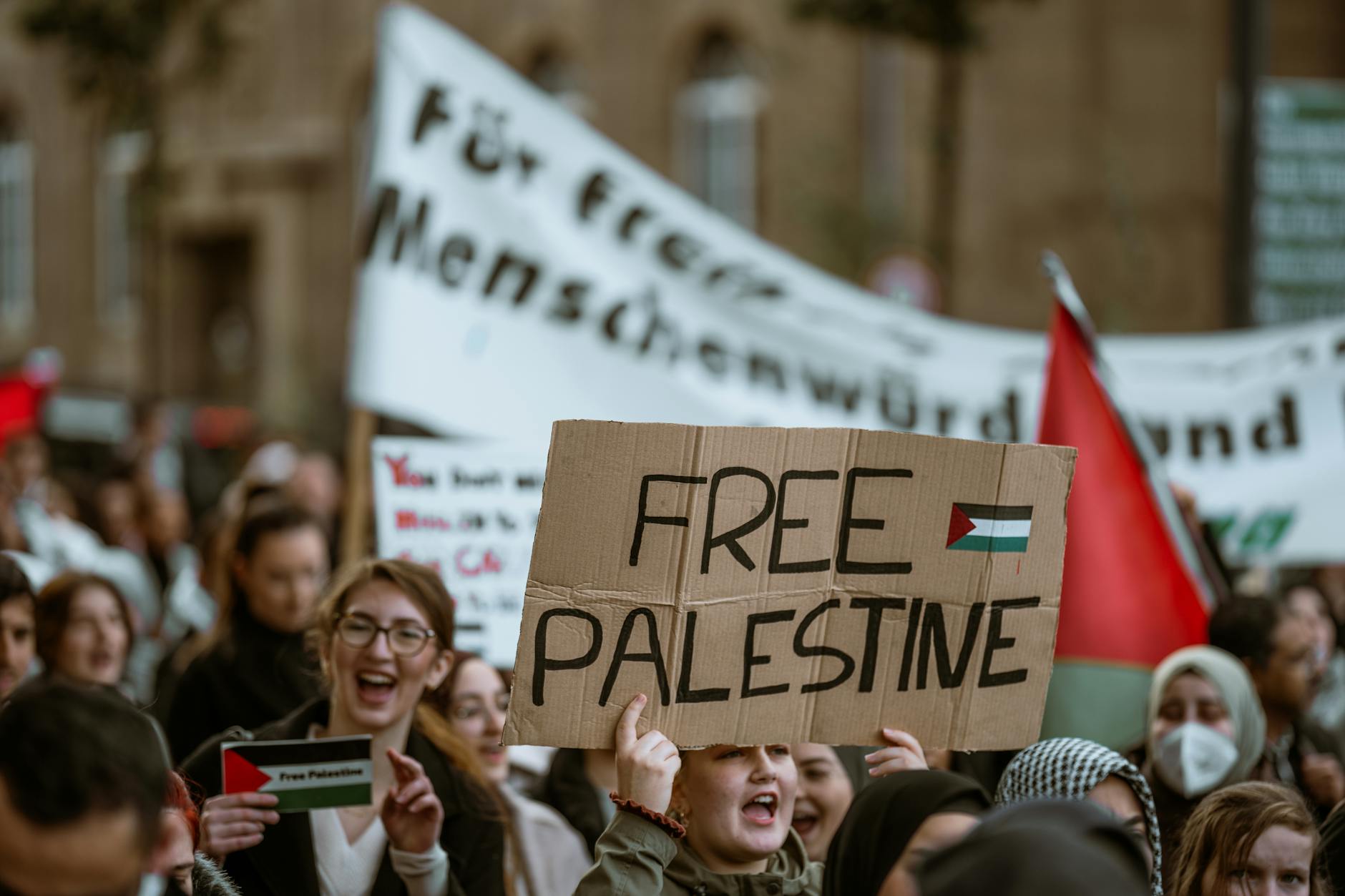
Few protest slogans of the post–October 7 era have generated more public argument than “Globalize the Intifada.” It has appeared on campus encampments at Columbia, UCLA, Oxford, and dozens of other universities. It has been chanted in the streets of New York, London, Paris, Berlin, and Sydney. It has been printed on placards, projected onto buildings, and stenciled onto subway walls.
For its defenders, the slogan is a misunderstood call for transnational solidarity with an oppressed people. For its critics, it is a barely coded incitement to attack Jews wherever they live.
To understand which interpretation is closer to the truth, one has to understand what the word “intifada” has actually meant in modern Middle Eastern history, what the verb “globalize” implies when attached to it, and what Jewish communities have experienced when versions of this slogan have been deployed in the past.
The conclusion is uncomfortable but unavoidable. Whatever individual chanters may believe they are saying, the historical content of the phrase is not abstract. It refers to specific violent events. And Jews who hear it as a threat are not paranoid. They are listening to language correctly.
What “Intifada” Actually Refers To
The Arabic word intifada means, literally, “shaking off” or “uprising.” In current usage, it almost exclusively refers to two specific historical events in the Israeli-Palestinian conflict.
The First Intifada (1987–1993) began with Palestinian protests, rock-throwing, strikes, and civil disobedience in the West Bank and Gaza. It also included shootings, stabbings, bombings, and assassinations of suspected collaborators. Approximately 200 Israelis and over 1,000 Palestinians were killed. The First Intifada is sometimes romanticized in retrospect as a primarily nonviolent uprising. Historical records show it included substantial armed violence throughout.
The Second Intifada (2000–2005) was something else entirely. It was a sustained campaign of suicide bombings, shootings, and other attacks deliberately targeting Israeli civilians. Pizzerias were bombed. Buses were blown up. Hotels hosting Passover seders were attacked. A nightclub full of teenagers in Tel Aviv was destroyed. By the time the violence subsided, roughly 1,000 Israelis had been killed, the vast majority of them civilians, and several thousand Palestinians had died as well.
When ordinary Israelis and Jews around the world hear the word “intifada,” they do not hear an abstract concept of resistance. They hear specific memories: friends and relatives killed at cafés, children blown up on school buses, parents murdered at family celebrations. The word names an experience that was lived recently enough to remain in living memory for nearly all adult Jews.
This matters because words carry their referents with them. To say “intifada” in a Jewish context is roughly equivalent to invoking the IRA bombing campaigns in a British context, or the Troubles-era assassinations in a Northern Irish context. The word is not a symbol detached from events. It names the events.
What “Globalize” Adds to the Slogan
The phrase “Globalize the Intifada” did not exist in its current form during the actual intifadas. It is a more recent construction, popularized in activist discourse in the late 2010s and accelerated after October 7, 2023.
The verb “globalize” is what makes the phrase distinctive. It expands the geographic scope of the intifada beyond Israel and the Palestinian territories. It calls for the methods of the intifada to be deployed in other places.
This is a critical interpretive point. The slogan does not say “stand in solidarity with Palestinians worldwide.” It does not say “globalize awareness of the Palestinian struggle.” It does not say “globalize support for Palestinian self-determination.”
It says globalize the intifada. The thing to be globalized is the intifada itself.
If the intifada is understood, as it is in the lived memory of nearly every Jew, as a campaign of violence against Jewish civilians, then “globalize the intifada” is a call to extend that campaign of violence to Jewish civilians outside Israel.
This is why the slogan reads, to most Jewish audiences, as a direct threat.
How Defenders Reframe the Slogan
Defenders of the chant typically offer one of several reframings.
Some argue that “intifada” simply means “uprising” in Arabic and should be understood in its generic linguistic sense rather than its historical-political one. By this reading, “globalize the intifada” is a call for global uprising against oppression, broadly construed, with no specific Jewish target implied.
Others argue that intifada refers primarily to nonviolent resistance, and that the violent elements of the actual intifadas were either Israeli provocations, exaggerated by Western media, or unrepresentative of the movement’s true character.
Still others argue that even if the slogan does call for violence, the violence in question is directed only at the Israeli state and its military, not at Jews as such.
Each of these defenses runs into the same fundamental problem. Slogans do not work the way dictionaries do. A slogan’s meaning is determined by its actual usage in actual communities, not by the most charitable possible reading of its component words.
When the word “intifada” is used in a Palestinian solidarity context, it refers to specific historical events that included extensive violence against Jewish civilians. When a protest crowd chants the slogan in front of a synagogue, a Jewish community center, or a Jewish neighborhood, the context narrows further still. Whatever the individual chanters believe, the practical communicative effect of the slogan in such settings is unambiguous.
There is also a useful test for evaluating any of these defenses. Imagine a slogan with comparable structural ambiguity directed at another minority group. Imagine, for example, a chant of “Globalize Kristallnacht” defended on the grounds that Kristallnacht literally means “Night of Broken Glass” in German and could be interpreted as an abstract metaphor for cultural transformation. The defense would be received as obscene, and rightly so. The historical referent is not optional. It is part of the meaning.
The same standard should apply to “intifada.”
What Jewish Communities Have Actually Experienced
The interpretive question is not, in any case, an abstract one. We can observe what has happened in the period since the slogan became widespread.
The Anti-Defamation League reported a roughly 360 percent increase in antisemitic incidents in the United States in the months following October 7, 2023, compared to the same period the year before. Similar surges were documented in the United Kingdom, France, Germany, Canada, and Australia.
These were not all directly connected to the slogan. But the broader rhetorical climate, of which “Globalize the Intifada” was a prominent fixture, coincided with:
- Synagogues being defaced and attacked
- Jewish students being harassed and assaulted on campuses
- Hostage posters being torn down by passersby
- Jewish businesses being vandalized
- Jewish neighborhoods in cities including New York, Los Angeles, and London being targeted by protests
- Jewish institutions hiring additional security at unprecedented levels
In some cases, attackers explicitly cited Palestinian solidarity as motivation. In others, the connection was implicit. But the broader pattern was unmistakable. The intifada had, in fact, been globalized, at least to the extent that Jews around the world experienced sharply increased hostility, harassment, and violence in the months following October 7.
The slogan did not cause this on its own. But the slogan was part of the rhetorical environment in which these events occurred. And the slogan made remarkably accurate predictions about what was about to happen.
When a slogan predicts the behavior that follows it, that is evidence about what the slogan means.
The Familiar Rhetorical Pattern
There is a long historical pattern in which slogans that target Jews are defended after the fact by appeals to the dictionary meaning of their component words.
In the Soviet Union, campaigns against “rootless cosmopolitans” were defended on the grounds that the phrase referred to insufficient patriotic attachment, not to Jews specifically. The fact that the campaign disproportionately targeted Jews was, defenders argued, coincidental.
In 1970s anti-Zionist rhetoric, calls for the dismantling of the “Zionist entity” were defended as critiques of a particular political ideology, not as threats to the Jewish population that the entity protected.
In contemporary discourse, accusations against “globalist elites” are defended as criticism of international financial structures rather than as coded references to Jews.
In each case, the literal denotation of the phrase is held up as proof that no anti-Jewish meaning could possibly be intended. In each case, the actual deployment of the phrase, the contexts in which it appears, the communities that use it, and the consequences that follow tell a different story.
“Globalize the Intifada” belongs to this lineage. Its defenders insist on a charitable interpretation. The communities it targets understand it differently. History has tended to vindicate the targets.
What This Means for Public Discourse
The argument over this slogan matters beyond the specific words involved. It is a test of how seriously the broader culture takes Jewish testimony about anti-Jewish hostility.
If a Jewish woman walking past a protest hears the chant as a threat, and a passerby tells her she is misinterpreting it, the question of who is right is not merely linguistic. It is a question about whose interpretive authority counts when Jewish safety is at stake.
For most of modern history, this question has been answered against Jews. Jewish communities have repeatedly tried to warn surrounding societies about anti-Jewish rhetoric that those societies dismissed as overreaction or paranoia. The warnings have been more often correct than not.
The same dynamic applies to “Globalize the Intifada.” Jewish communities have said clearly and consistently what they hear when the slogan is chanted. The honest response is not to lecture them about the Arabic etymology. The honest response is to take their testimony seriously.
A movement that genuinely wished to express solidarity with Palestinians without threatening Jews could choose from countless other slogans. The fact that it has chosen, and continues to choose, a phrase that explicitly globalizes a historical campaign of violence against Jewish civilians tells us something about its priorities.
The Broader Permission Structure
The slogan does not exist in isolation. It is one element of what might be called a permission structure: a network of phrases, frameworks, and ideological assumptions that have made anti-Jewish hostility increasingly acceptable in spaces that consider themselves progressive.
The components of this structure include the recoding of Israel from refugee state to colonial project, the placement of Jews on the “white” and “powerful” side of modern identity hierarchies, the development of language that treats Jewish concerns as derivative of larger political agendas, and the use of phrases that target Jews while permitting their users to disclaim the targeting.
“Globalize the Intifada” is a particularly visible piece of this larger architecture. It is not the architecture itself. But it offers a useful window into how the architecture works.
The phrase tells us that, in significant portions of contemporary progressive politics, calls for violence directed at Jewish civilians can be chanted publicly, defended intellectually, and protected institutionally, provided the right ideological wrapper is applied. That is not a minor cultural development. It is a significant rupture in the postwar moral consensus that Jewish safety was a settled question.
For Jews who lived through the past two years, no amount of after-the-fact reinterpretation will undo what the slogan, and the climate that produced it, communicated. The historical lessons learned in 1894, in 1948, in 1967, and in 2023 are once again being learned in real time.
For a full account of how this permission structure was built across two centuries, from the early socialist suspicion of Jewish particularism through Soviet anti-Zionism to the campus encampments of the present, see The History of Left-Wing Antisemitism: How Progressive Ideology Turned on the Jews, from Marx to October 7, available now on Amazon.
Leave a Reply