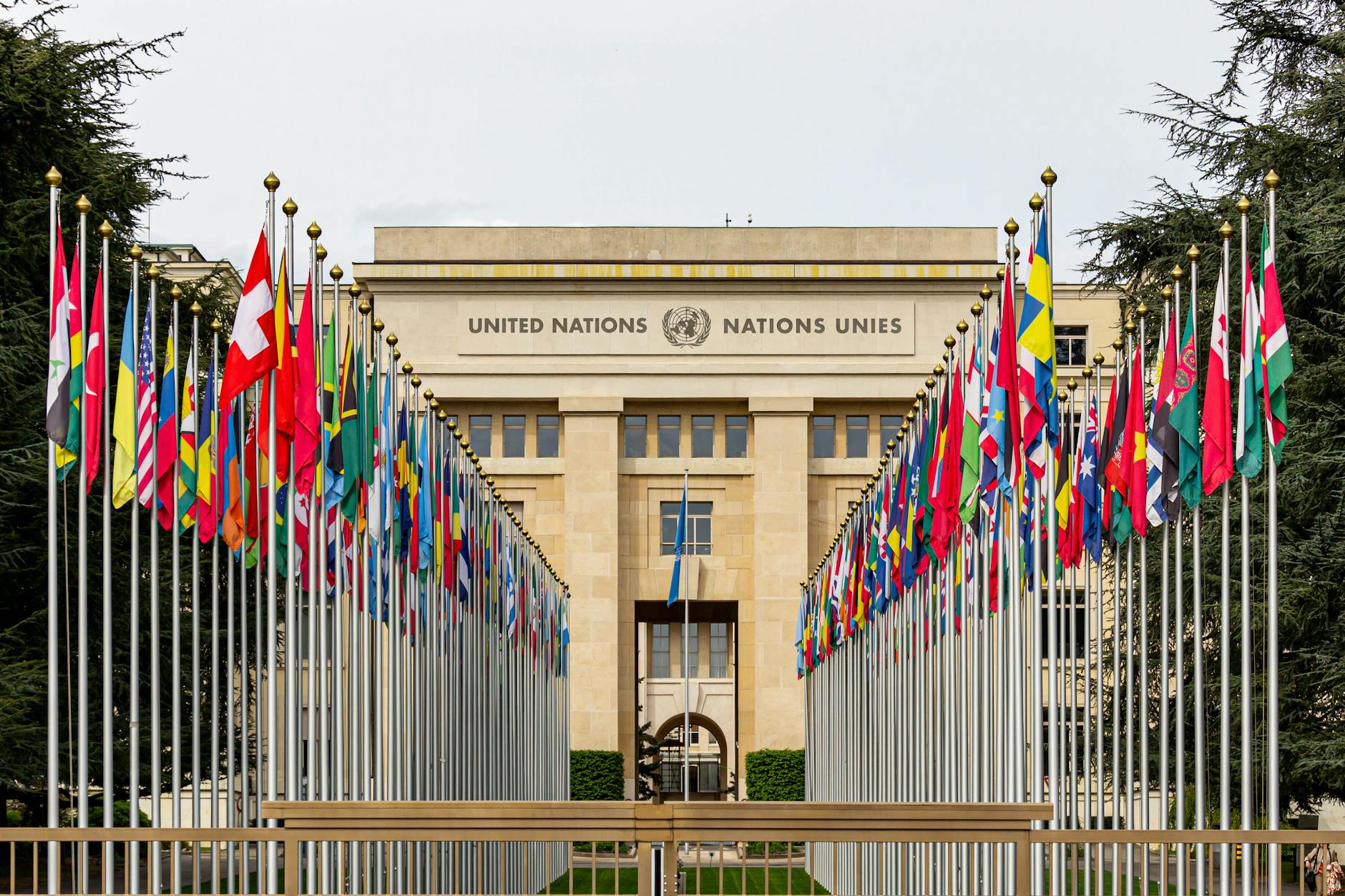
For decades, critics across the political spectrum have argued that the United Nations has applied a unique and disproportionate standard to the State of Israel. While defenders of the UN insist that Israel receives attention because of the centrality of the Israeli–Palestinian conflict, opponents point to voting patterns, permanent agenda items, and an overwhelming number of resolutions targeting the Jewish state compared to serial human rights violators.
The debate over UN bias against Israel is no longer confined to Israeli diplomats or pro-Israel advocacy organizations. Former UN officials, Western democracies, legal scholars, and even some longtime supporters of the institution have acknowledged that parts of the United Nations system appear structurally fixated on Israel in ways unmatched by any other nation.
Understanding this controversy requires examining the history, mechanisms, and political coalitions that transformed Israel into the UN’s most frequently condemned country.
The Origins of Anti-Israel Sentiment at the United Nations
Ironically, the United Nations played a foundational role in Israel’s creation. In 1947, the UN voted for the partition of Mandatory Palestine, recommending the establishment of both Jewish and Arab states. Israel accepted the proposal; Arab states rejected it and launched war after Israel declared independence in 1948.
In the organization’s early decades, Israel often enjoyed considerable support from Western democracies. But geopolitical changes dramatically altered the balance inside the UN system.
The decolonization wave of the 1950s and 1960s brought dozens of newly independent states into the General Assembly. Many aligned politically with the Soviet bloc and the Arab world. During the Cold War, the Soviet Union increasingly framed Israel as a colonial and imperial project, despite Moscow having initially supported Israel’s creation.
This ideological transformation reshaped international discourse. Israel increasingly became portrayed not as a vulnerable post-Holocaust refuge for Jews, but as a “settler-colonial” power. That framework remains highly influential today across large portions of the UN system and modern progressive activism.
The “Zionism Is Racism” Resolution
One of the most notorious moments in UN history came in 1975, when the General Assembly passed Resolution 3379 declaring that Zionism was “a form of racism and racial discrimination.”
The resolution represented a diplomatic triumph for the Soviet bloc and Arab states. It effectively recast Jewish national self-determination as morally illegitimate within international politics.
Israeli ambassador Chaim Herzog famously denounced the resolution before the General Assembly, comparing it to antisemitic political libels throughout history. He tore up the resolution publicly after delivering his speech.
The resolution deeply damaged the UN’s credibility among many Jews worldwide. For critics, it confirmed that anti-Zionism had become a vehicle through which traditional hostility toward Jews could be repackaged in the language of anti-racism and anti-colonialism.
The UN eventually revoked Resolution 3379 in 1991 after the collapse of the Soviet Union and shifting global politics. Yet many observers argue that its ideological assumptions never fully disappeared.
The UN Human Rights Council and Agenda Item 7
No institution receives more criticism regarding anti-Israel bias than the UN Human Rights Council (UNHRC).
The council maintains a permanent agenda item — Agenda Item 7 — devoted exclusively to Israel. No other country in the world has a dedicated standing agenda item targeting it. Even governments widely condemned for severe human rights abuses, including Iran, North Korea, China, or Syria, are not treated this way.
The United Kingdom recently reaffirmed its objection to this structure, stating that Item 7 “unfairly and uniquely singles out the State of Israel” and represents a “disproportionate focus.”
Critics argue that this institutional design guarantees recurring condemnation of Israel regardless of developments elsewhere in the world.
Organizations monitoring UN voting patterns have repeatedly documented the imbalance. According to UN Watch, Israel receives more condemnatory resolutions annually than many authoritarian states combined.
Supporters of the council reject accusations of bias and argue that Israel’s long-running occupation of disputed territories justifies intensive scrutiny. Nevertheless, the existence of a permanent Israel-specific agenda item remains one of the clearest symbols of alleged institutional prejudice.
Israel Versus the World: Resolution Disparities
One of the most commonly cited statistics in the debate involves the sheer number of UN resolutions directed against Israel.
According to data compiled by watchdog organizations, the UN General Assembly passed more resolutions condemning Israel between 2015 and 2024 than those targeting all other countries combined.
Even critics of Israeli policy sometimes acknowledge the disproportion. Former UN Secretary-General Ban Ki-moon admitted in 2016 that Israel receives “disproportionate” attention within the UN system, warning that this dynamic undermines the organization’s credibility.
Defenders of the UN argue that the Israeli–Palestinian conflict remains unresolved for decades and therefore naturally generates repeated resolutions. Critics counter that many far deadlier conflicts and mass atrocities have received dramatically less sustained institutional attention.
This discrepancy has fueled growing skepticism toward the UN among Israelis and many Jewish communities worldwide.
Soviet Influence and the Ideological Roots of Modern Anti-Zionism
To understand the persistence of anti-Israel sentiment at the UN, historians often point to Soviet propaganda campaigns during the Cold War.
Beginning in the late 1960s, Soviet ideological institutions aggressively promoted anti-Zionism internationally. Zionism was reframed as a form of racism, fascism, colonialism, and capitalist exploitation. Soviet publications frequently blurred distinctions between Zionists and Jews more generally.
Scholars such as Robert S. Wistrich and Walter Laqueur argued that Soviet anti-Zionist campaigns recycled older antisemitic stereotypes under political language acceptable to the modern left.
These narratives heavily influenced many developing nations and international organizations, including factions within the United Nations.
The legacy of this ideological shift remains visible today in debates where Jewish nationalism is uniquely denied legitimacy while other forms of ethnic or national self-determination are accepted.
UNRWA and the Controversy Over Palestinian Exceptionalism
Another major source of controversy is the United Nations Relief and Works Agency for Palestine Refugees in the Near East (UNRWA).
Unlike every other refugee population in the world, Palestinians have a dedicated UN agency exclusively serving them. Critics argue this arrangement institutionalized permanent refugee status across generations instead of encouraging resettlement and normalization.
Supporters insist UNRWA fills essential humanitarian functions. Critics counter that the organization has become politically entangled with anti-Israel activism and perpetuates conflict narratives.
The issue became even more contentious after allegations emerged connecting some UNRWA employees to Hamas activity following the October 7 attacks. Several governments suspended or reviewed funding in response.
For many observers, UNRWA symbolizes a broader pattern in which Israel is treated through exceptional mechanisms unavailable elsewhere in the international system.
Why Many Jews View UN Bias as a Form of Modern Antisemitism
Not every criticism of Israel is antisemitic. Legitimate criticism exists in every democracy, including Israel itself.
But many Jewish observers argue that the UN crosses the line from criticism into discriminatory exceptionalism when Israel is singled out in ways no other country is.
This concern intensified after the rise of “anti-Zionism” as a dominant ideological framework in portions of international institutions and progressive political movements. When Jewish national identity alone is characterized as uniquely illegitimate, many Jews interpret the distinction between anti-Zionism and antisemitism as increasingly artificial.
The issue is not merely diplomatic. It affects how Jews perceive their place within international politics.
For many Israelis and diaspora Jews, the repeated singling out of the world’s only Jewish state evokes older historical patterns in which Jews were treated as uniquely guilty, uniquely dangerous, or uniquely undeserving of equal standards.
Defenders of the United Nations Response
Supporters of the UN reject claims of institutional antisemitism.
They argue that Israel receives extensive scrutiny because of the unresolved Palestinian issue, settlement expansion, military occupation, and repeated wars in Gaza. They note that the UN has also criticized Hamas terrorism and human rights abuses by Palestinian authorities.
Many legal scholars contend that the Israeli–Palestinian conflict carries unique international implications due to disputed territories, refugee questions, and decades of failed diplomacy.
From this perspective, accusations of “bias” are often viewed as attempts to delegitimize international criticism of Israeli policies.
Nevertheless, even some governments critical of Israel have acknowledged that the structure and rhetoric of parts of the UN system create perceptions of unfairness that damage institutional credibility.
The Political Reality of the United Nations
Ultimately, the UN is not a neutral moral authority operating above politics. It is a political body composed of member states pursuing their own interests, alliances, and ideological agendas.
Voting blocs matter enormously. Arab and Islamic states, alongside many developing nations, have historically commanded large voting coalitions within the General Assembly. During the Cold War, Soviet influence reinforced anti-Zionist narratives internationally. Today, progressive ideological frameworks centered on colonialism and intersectionality often shape discourse around Israel within international institutions.
The result is an environment where Israel occupies a uniquely controversial position unmatched by any other democratic nation.
Whether one interprets this as legitimate accountability or institutional prejudice depends largely on broader political assumptions. But the perception of disproportionate treatment is now widespread enough that even allied governments and former UN officials have publicly acknowledged it.
Conclusion
The controversy surrounding UN bias against Israel is ultimately about more than resolutions or diplomatic procedures. It reflects deeper battles over nationalism, colonialism, Jewish identity, international law, and the legacy of twentieth-century ideological movements.
To critics, the United Nations has repeatedly transformed Israel into a symbolic global defendant held to standards rarely applied elsewhere. To defenders, Israel’s policies simply warrant sustained international scrutiny.
But regardless of perspective, the historical record demonstrates that Israel occupies an exceptional place within the UN system — one that has profoundly shaped Jewish perceptions of international institutions for generations.
As debates over antisemitism, anti-Zionism, and global politics continue intensifying in the twenty-first century, the question of whether the United Nations applies a double standard to Israel will remain one of the defining controversies of modern international diplomacy.
Leave a Reply